

How Long Until 3:30 depends on your current time and whether you mean AM or PM. If it’s 1:00 PM, you have 2 hours and 30 minutes left until 3:30 PM. If it’s 3:00 PM, only 30 minutes remain. The answer changes as time passes, so checking your clock is the first step.
Are you waiting for a class, planning a meeting, or setting an alarm? Knowing the time left can help you plan your day without rushing. You can calculate the countdown by subtracting the current time from your target time.
If you’re counting until 3:30 AM, you may need to count past midnight. This guide shares simple examples, helpful tables, and easy steps to find the exact time remaining. You’ll learn how to calculate the difference in hours and minutes without confusion.
Time Remaining Until 3:30 PM
The time remaining until 3:30 PM changes throughout the day.
For example, at noon, you have 3 hours and 30 minutes left, while at 3:00 PM, you have just 30 minutes.
If you want an accurate countdown, check your current local time first.
Then compare it with 3:30 PM using the examples and calculation method below.
Quick Answer: How Long Until 3:30?
To find out how long until 3:30, subtract the current time from your target time.
If your clock shows 1:30 PM, the wait until 3:30 PM is exactly 2 hours.
At 3:10 PM, you have only 20 minutes remaining.
The answer changes depending on whether your target is in the morning or afternoon.
If it’s currently 10:00 PM and you’re waiting for 3:30 AM, the remaining time is 5 hours and 30 minutes.
Here are a few quick examples:
- 12:00 PM to 3:30 PM: 3 hours and 30 minutes.
- 1:00 PM to 3:30 PM: 2 hours and 30 minutes.
- 2:00 PM to 3:30 PM: 1 hour and 30 minutes.
- 3:00 PM to 3:30 PM: 30 minutes.
- 3:15 PM to 3:30 PM: 15 minutes.
- 10:00 PM to 3:30 AM: 5 hours and 30 minutes.
These examples assume both times use the same local clock and that the target is the next occurrence of 3:30.
If you mean a different date or time zone, the calculation may change.
At-a-Glance: Countdown Table to 3:30 PM
A countdown table makes it easy to check the remaining time without doing the subtraction yourself.
Find your current time in the first column and read the answer in the second.
| Current Time | Time Until 3:30 PM |
| 9:00 AM | 6 hours 30 minutes |
| 10:00 AM | 5 hours 30 minutes |
| 11:00 AM | 4 hours 30 minutes |
| 12:00 PM | 3 hours 30 minutes |
| 12:30 PM | 3 hours |
| 1:00 PM | 2 hours 30 minutes |
| 1:30 PM | 2 hours |
| 2:00 PM | 1 hour 30 minutes |
| 2:15 PM | 1 hour 15 minutes |
| 2:30 PM | 1 hour |
| 2:45 PM | 45 minutes |
| 3:00 PM | 30 minutes |
| 3:10 PM | 20 minutes |
| 3:15 PM | 15 minutes |
| 3:20 PM | 10 minutes |
| 3:25 PM | 5 minutes |
| 3:29 PM | 1 minute |
| 3:30 PM | 0 minutes |
The table assumes you’re counting toward 3:30 PM on the same day.
If the current time is already past 3:30 PM, you’ll need to count toward the next day’s 3:30 PM instead.
For example, at 4:00 PM, the next 3:30 PM is 23 hours and 30 minutes away.
That distinction matters when you’re setting reminders or planning something for tomorrow.
Countdown Table to 3:30 AM
Calculating the time until 3:30 AM often involves crossing midnight.
If it’s evening where you are, count the hours until midnight first, then add the time from midnight to 3:30 AM.
| Current Time | Time Until 3:30 AM |
| 8:00 PM | 7 hours 30 minutes |
| 9:00 PM | 6 hours 30 minutes |
| 10:00 PM | 5 hours 30 minutes |
| 11:00 PM | 4 hours 30 minutes |
| 11:30 PM | 4 hours |
| 12:00 AM | 3 hours 30 minutes |
| 12:30 AM | 3 hours |
| 1:00 AM | 2 hours 30 minutes |
| 1:30 AM | 2 hours |
| 2:00 AM | 1 hour 30 minutes |
| 2:15 AM | 1 hour 15 minutes |
| 2:30 AM | 1 hour |
| 2:45 AM | 45 minutes |
| 3:00 AM | 30 minutes |
| 3:15 AM | 15 minutes |
| 3:25 AM | 5 minutes |
| 3:29 AM | 1 minute |
| 3:30 AM | 0 minutes |
For instance, if it’s 10:30 PM, midnight is 1 hour and 30 minutes away.
Add another 3 hours and 30 minutes to reach 3:30 AM, giving you a total wait of 5 hours.
If it’s already 4:00 AM, the next 3:30 AM is tomorrow.
You would have to wait 23 hours and 30 minutes.
How to Calculate Time Until 3:30 Yourself
You don’t need a special calculator to work out the time difference between now and 3:30.
A clock, a phone, or a simple subtraction method is enough.
The main thing is to identify the correct target and account for any minutes or midnight crossing.
Follow these steps to get an accurate answer.
Read More:https://okyaora.com/
Step 1: Confirm AM or PM
First, decide whether your target is 3:30 AM or 3:30 PM.
AM refers to the period from midnight until just before noon, while PM covers noon until just before midnight.
For example, if your appointment is at 3:30 in the afternoon, your target is 3:30 PM.
If you need to wake up at 3:30 in the morning, your target is 3:30 AM.
Choosing the wrong one can change your calculation by 12 hours or more.
Check your schedule, alarm, or appointment details before calculating.
Step 2: Convert to 24-Hour Time (Optional but Helpful)
The 24-hour clock removes the AM and PM labels.
It represents midnight as 00:00, noon as 12:00, and 3:30 PM as 15:30.
Here are some common conversions:
- 3:30 AM: 03:30
- 9:00 AM: 09:00
- 12:00 PM: 12:00
- 1:00 PM: 13:00
- 3:30 PM: 15:30
- 10:00 PM: 22:00
- 11:30 PM: 23:30
To convert a PM time other than 12 PM, add 12 to its hour.
For example, 2:00 PM becomes 14:00, and 3:30 PM becomes 15:30.
This method is especially helpful when calculating schedules, travel times, and work shifts.
However, you can use the standard 12-hour clock if you find it easier.
Step 3: Subtract Current Time From 3:30
Once you’ve identified the target, subtract the current time from it.
For example, if it’s 1:15 PM, compare 13:15 with 15:30.
The difference is 2 hours and 15 minutes.
That means you have 135 minutes remaining until 3:30 PM.
You can also calculate the difference in stages.
From 1:15 PM to 2:15 PM is one hour, and from 2:15 PM to 3:15 PM is another hour, followed by 15 minutes.
Breaking the calculation into smaller parts makes it easier to check.
It’s particularly useful when you’re dealing with times that don’t end on a full hour.
Step 4: Adjust for Minutes That Don’t Divide Evenly
Sometimes, the current time includes minutes that make subtraction less straightforward.
For example, calculating from 1:47 PM to 3:30 PM requires a little more attention.
From 1:47 PM to 2:00 PM is 13 minutes.
From 2:00 PM to 3:00 PM is one hour, and from 3:00 PM to 3:30 PM is another 30 minutes.
Add those amounts together to get 1 hour and 43 minutes.
You can use this approach whenever the current minutes make direct subtraction awkward.
If you prefer, convert both times into total minutes after midnight.
Subtract the current total from the target total, then convert the result back into hours and minutes.
Worked Examples: Real-Life Scenarios
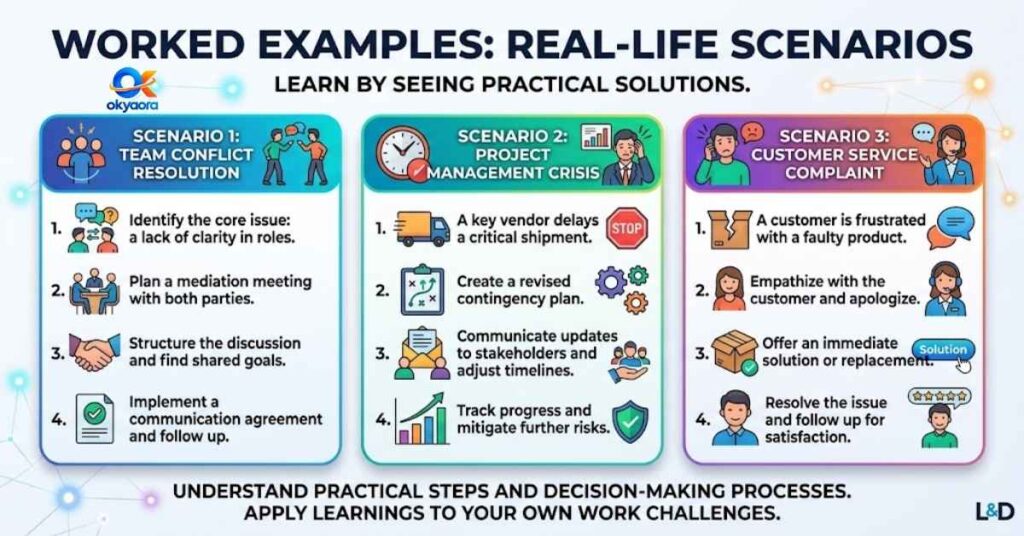
Everyday situations make a time countdown easier to understand.
Whether you’re waiting for a meeting, finishing homework, or preparing for a trip, the same calculation applies.
Here are several examples showing how to calculate the time remaining until 3:30.
Example 1: Finishing a Class
Suppose your class ends at 3:30 PM, and it’s currently 12:45 PM.
You have 2 hours and 45 minutes left before the class ends.
If you want to divide that time into study sessions, you could study for an hour, take a short break, and continue.
The countdown gives you a practical way to plan the remaining time.
Example 2: Waiting for a Meeting
Imagine you have a video meeting scheduled for 3:30 PM.
Your clock reads 2:55 PM, so you have 35 minutes to prepare.
You could spend 15 minutes reviewing your notes, 10 minutes checking your connection, and the final 10 minutes getting settled.
A simple countdown helps you avoid rushing at the last minute.
Example 3: Setting an Early Alarm
Suppose it’s 10:15 PM, and you need to wake up at 3:30 AM.
You have 5 hours and 15 minutes until your alarm time.
That is the time between now and the alarm, not a recommendation about how much sleep you need.
If you’re planning an early start, consider your bedtime and the time you need to get ready.
Example 4: Getting Ready for Work
You need to leave home at 3:30 PM, but it’s already 2:20 PM.
You have 1 hour and 10 minutes to prepare.
You might use the first 40 minutes to finish your tasks and the remaining 30 minutes to get ready.
Planning backward from your departure time can help you leave on schedule.
Example 5: Crossing Midnight
It’s 11:20 PM, and an event begins at 3:30 AM.
Midnight is 40 minutes away, and another 3 hours and 30 minutes remain after midnight.
Your total wait is 4 hours and 10 minutes.
Separating the calculation at midnight prevents you from accidentally counting the wrong number of hours.
Why People Search “How Long Until 3:30”
People usually search this question because they need a quick answer for a specific task.
They might be waiting for an appointment, checking when a shift ends, or planning an alarm.
Others need help with a time countdown because mental arithmetic can become confusing when minutes and midnight are involved.
A direct answer, followed by a clear calculation, helps them make a decision without wasting time.
The phrase can also refer to different situations depending on the person’s location and schedule.
Someone in the morning might mean 3:30 AM, while someone planning an afternoon appointment probably means 3:30 PM.
That’s why a useful answer should explain both possibilities instead of assuming one.
It should also make clear whether the target is today or the next occurrence tomorrow.
How to Calculate the Countdown in Minutes
Converting the remaining time into minutes can help when you’re working with a timer or planning short tasks.
One hour contains 60 minutes, so multiply the number of hours by 60 and add the remaining minutes.
For example, 2 hours and 30 minutes equals 150 minutes.
The calculation is 2 × 60 + 30 = 150.
Here are a few more examples:
- 30 minutes: 30 minutes.
- 1 hour and 15 minutes: 75 minutes.
- 2 hours: 120 minutes.
- 3 hours and 30 minutes: 210 minutes.
- 5 hours and 30 minutes: 330 minutes.
This method is useful if you’re setting a countdown timer that accepts minutes instead of a clock time.
Just make sure you enter the remaining duration rather than the target time itself.
Common Time-Zone Consideration
Your countdown depends on the local time where the event will happen.
If you’re scheduling a call with someone in another country, their 3:30 PM may not match your 3:30 PM.
For example, 3:30 PM in one time zone could correspond to morning or evening elsewhere.
The exact difference depends on the locations and the dates involved.
Daylight saving time can also affect time-zone differences in places that observe it.
Some regions move their clocks forward or backward during the year, while others keep the same standard time.
If you’re planning an international meeting, confirm the event’s time zone before calculating the countdown.
A calendar app that displays both locations can reduce confusion and help prevent missed appointments.
Common Mistakes People Make
Even a simple countdown can go wrong if you overlook AM and PM or forget about midnight.
The following mistakes are worth checking before relying on your answer.
Don’t:
- Don’t confuse AM with PM. A morning alarm and an afternoon appointment refer to different times.
- Don’t ignore midnight. If your target is 3:30 AM and it’s already nighttime, count across the date change.
- Don’t treat 12:00 AM as noon. Midnight is 12:00 AM, while noon is 12:00 PM.
- Don’t forget the minutes. From 2:45 PM to 3:30 PM is 45 minutes, not one hour.
- Don’t assume the target is today. If 3:30 has already passed, determine whether you mean tomorrow.
- Don’t overlook the time zone. A remote event may follow another location’s clock.
These errors can lead to late arrivals, incorrect alarms, or missed deadlines.
A quick check of the target time and date can prevent most of them.
Do:
- Do confirm the target. Decide whether you need 3:30 AM or 3:30 PM.
- Do check the current time. Use your device’s clock for an accurate starting point.
- Do split the calculation. Count to the next hour, then add the remaining time.
- Do check the date. Include tomorrow when the target falls after midnight.
- Do verify remote appointments. Confirm which time zone the organizer is using.
For example, if it’s 2:50 PM, you have 40 minutes until 3:30 PM.
Counting 10 minutes to 3:00 PM and another 30 minutes gives you the same result.
Terminology & Related Concepts
Understanding a few basic time terms makes countdown calculations easier.
These concepts also help when you use digital clocks, calendars, and scheduling tools.
AM and PM: AM refers to the time from midnight until before noon, while PM covers noon until before midnight.
These labels help distinguish 3:30 in the morning from 3:30 in the afternoon.
24-hour time: This system represents times from 00:00 through 23:59.
For example, 3:30 AM is 03:30, while 3:30 PM is 15:30.
Elapsed time: This means the amount of time that passes between two moments.
If you start at 1:00 PM and finish at 3:30 PM, the elapsed time is 2 hours and 30 minutes.
Countdown timer: A timer measures how much time remains before a duration ends.
You can set one for 30 minutes if it’s currently 3:00 PM and your target is 3:30 PM.
Time interval: This is the period between a starting point and an ending point.
A 90-minute interval is equivalent to 1 hour and 30 minutes.
Midnight crossing: This happens when a calculation moves from one calendar day to the next.
For example, the time from 11:30 PM to 3:30 AM is 4 hours.
Frequently Asked Questions
How Long Until 3:30 PM If It’s Noon?
If it’s 12:00 PM, you have 3 hours and 30 minutes until 3:30 PM.
You can calculate this by counting three full hours to 3:00 PM, then adding another 30 minutes.
How Long Until 3:30 AM If It’s 10 PM?
From 10:00 PM to midnight is 2 hours.
From midnight to 3:30 AM is another 3 hours and 30 minutes, making the total 5 hours and 30 minutes.
How Many Minutes Are There Until 3:30?
The number of minutes depends on your current time.
For example, if it’s 3:00 PM, you have 30 minutes left, which equals half an hour.
What If It’s Already Past 3:30?
If the target time has passed, calculate toward the next occurrence of 3:30.
For example, at 4:00 PM, the next 3:30 PM is 23 hours and 30 minutes away.
Is 3:30 AM the Same as 3:30 PM?
No, they refer to different times of day.
3:30 AM is in the early morning, while 3:30 PM is in the afternoon.
Can I Use a Calculator to Find the Time Until 3:30?
Yes, a time calculator or countdown tool can help you find the difference.
Enter the current time and the correct target time, making sure you account for AM or PM and any date change.
Final Thoughts
Knowing How Long Until 3:30 helps you plan your day and manage your time. You only need to check the current time and subtract it from 3:30. If you want to know How Long Until 3:30 PM, make sure you check whether it is morning or afternoon. The same rule applies when counting down to 3:30 AM. Simple time tables and examples can make the calculation much easier.
If you still wonder How Long Until 3:30, start by looking at your clock. Then count the remaining hours and minutes. Remember to account for midnight when your countdown crosses into a new day. Whether you are waiting for work, a class, a meeting, or an appointment, knowing the time left helps you stay prepared. Use these easy steps whenever you need a quick answer. With a little practice, calculating How Long Until 3:30 becomes simple and stress-free.